

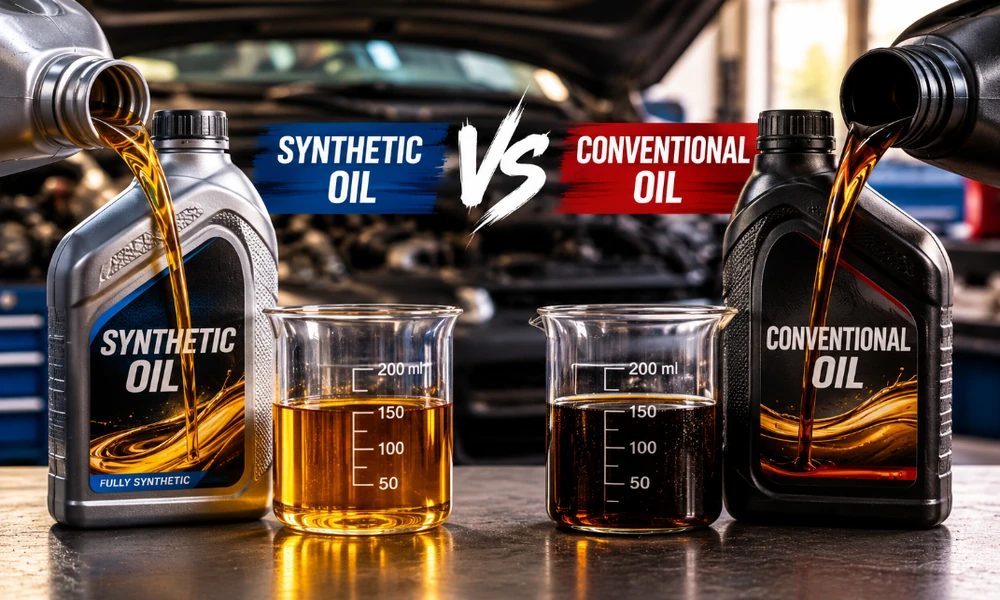
Engine oil does more than keep parts slippery. It helps cool the engine, reduce friction, clean internal parts, and protect against wear. Still, many drivers feel unsure when choosing between synthetic and conventional oil. The labels sound technical, and the price difference can make the decision feel harder.
The right choice depends on your vehicle, driving habits, mileage, climate, and what your owner’s manual recommends.
What Is Conventional Oil?
Conventional oil comes from refined crude oil. It has been used in engines for many years and still works well for many basic vehicles. It helps lubricate engine parts and reduce wear during normal driving.
Conventional oil is usually cheaper than synthetic oil. That makes it a common choice for older vehicles, simple engines, and drivers who do not put heavy stress on their cars.
It may be a good fit if you:
Drive an older vehicle that was designed for conventional oil
Follow shorter oil change intervals
Want a lower-cost oil option
Do not drive in extreme heat, cold, or heavy traffic often
Conventional oil can still protect your engine when changed on time. The key is not stretching it too far.
What Is Synthetic Oil?
Synthetic oil is engineered to provide stronger and more stable protection. It is made through a more controlled refining and chemical process, giving it a more consistent structure than conventional oil.
Because of this, synthetic oil usually performs better in extreme temperatures. It flows more easily in cold starts and holds up better in high heat. It also resists breakdown longer, which may allow longer oil change intervals depending on the vehicle and manufacturer guidelines.
Synthetic oil may be a good choice if you:
Drive a newer vehicle
Own a turbocharged or high-performance engine
Drive in hot weather often
Sit in traffic regularly
Tow or haul heavy loads
Want better engine protection over time
Many modern vehicles require synthetic oil. In that case, it is not really optional. The engine was designed with that oil type in mind.
What Is Synthetic Blend Oil?
Synthetic blend oil sits between conventional and full synthetic. It combines conventional oil with synthetic oil. It offers better protection than conventional oil but usually costs less than full synthetic.
This can be a good middle-ground choice for drivers who want added protection without paying the full synthetic price. It is often used in trucks, SUVs, and vehicles that handle moderate stress.
Synthetic vs Conventional Oil: The Main Difference
The main difference is performance and durability.
Conventional oil works well for basic protection. Synthetic oil offers stronger protection, better temperature performance, and longer resistance to breakdown.
Think of it this way. Conventional oil is fine for many simple driving needs. Synthetic oil gives extra protection when the engine works harder.
Synthetic oil can help with:
Cleaner engine operation
Better cold-start protection
Better heat resistance
Longer-lasting oil performance
Reduced engine wear over time
Conventional oil can still work if your vehicle allows it and you follow the proper service schedule.
Does Every Car Need Synthetic Oil?
No, not every car needs synthetic oil. Some vehicles can use conventional oil safely. But many newer vehicles require synthetic oil or strongly recommend it.
The best place to check is your owner’s manual. It will list the correct oil type, viscosity, and service interval. Using the wrong oil may affect performance and could lead to engine problems over time.
If the manual says synthetic oil is required, use synthetic. If it allows conventional oil, you still need to consider your driving conditions.
When Should You Choose Synthetic Oil?
Synthetic oil is often the better choice if your car faces harder conditions. Stop-and-go traffic, hot weather, long highway drives, towing, short trips, and heavy loads all place stress on the engine.
Short trips are especially tough because the engine may not fully warm up. Moisture and contaminants can build up faster. Synthetic oil can handle these conditions better than conventional oil in many cases.
Synthetic oil is also useful for high-mileage vehicles if the engine is in good condition. Some high-mileage synthetic oils include additives that help protect seals and reduce wear.
When Is Conventional Oil Enough?
Conventional oil may be enough for older cars with simple engines, especially if the manufacturer allows it. It can also work well for drivers who keep up with regular oil changes and do not drive in harsh conditions.
But saving money upfront does not help if oil changes are delayed. Conventional oil usually needs more frequent replacement, so maintenance discipline matters.
Final Thoughts
Synthetic vs conventional oil is not just about price. It is about what your engine needs. Synthetic oil offers stronger protection and better performance under stress. Conventional oil can still be useful for certain vehicles and normal driving.
The safest answer is always to follow your owner’s manual. After that, think about how and where you drive. If your engine works hard, synthetic oil is usually worth the added cost. If your vehicle allows conventional oil and your driving is light, conventional may be enough.
Good oil protects your engine. The right oil protects it better.
This post was written by a professional at Tires2Go Florida. Tires2Go Florida is a trusted automotive service center located in Pinellas Park, Florida, serving drivers across St. Petersburg, Tampa, Clearwater, and Largo. Our certified mechanics handle tires St Petersburg FL and wheel replacement, brake service, suspension repairs, oil changes, wheel alignments, tire balancing, and road force balancing. We also specialize in ADAS calibration, suspension modifications, lift kits, and lowering kits using quality parts and modern diagnostic equipment. From routine maintenance to advanced automotive services, Tires2Go Florida provides dependable solutions and tires for sale for vehicles throughout the Tampa Bay area.
